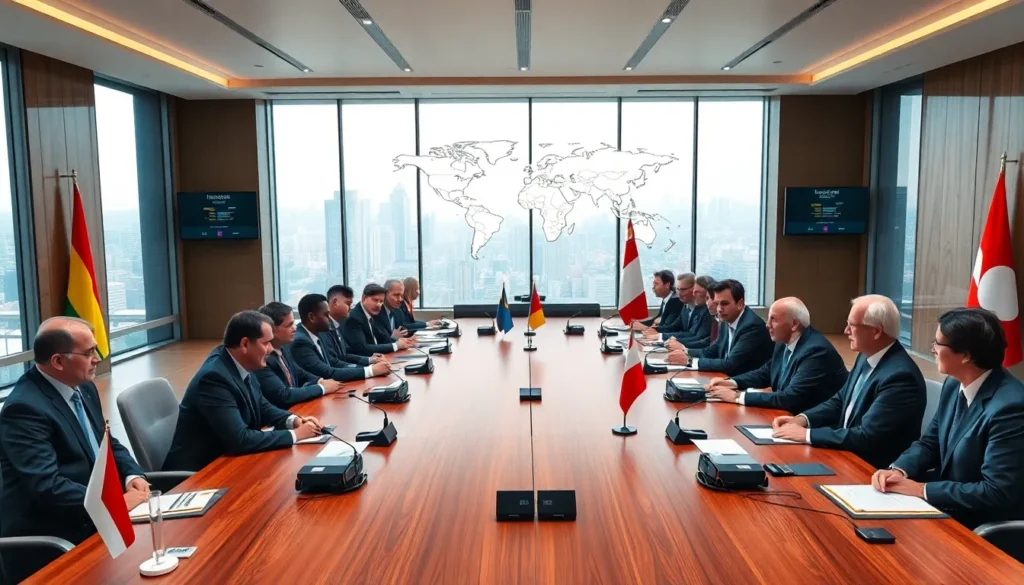
Global affairs vs. international relations, these terms often get used interchangeably, but they represent distinct academic disciplines with different scopes and applications. Students, professionals, and curious minds frequently ask: what separates these two fields? The answer matters more than you might think. Choosing between global affairs and international relations programs can shape career trajectories, research focus, and professional opportunities. This article breaks down the key differences between global affairs and international relations, explains what each field covers, and helps readers determine which path aligns with their goals.
Key Takeaways
- Global affairs vs. international relations represents a choice between broad interdisciplinary study and a focused political science approach to world events.
- International relations concentrates on nation-state interactions, diplomacy, and security, while global affairs encompasses economics, health, environment, and cultural issues.
- Global affairs gives equal attention to non-state actors like corporations, NGOs, and social movements alongside government relationships.
- International relations uses established theoretical frameworks (realism, liberalism, constructivism), whereas global affairs borrows methods from multiple academic disciplines.
- Career paths differ: international relations leads toward diplomacy and security roles, while global affairs opens doors in development, corporate, and humanitarian sectors.
- Your choice between global affairs vs. international relations should align with your career goals, whether state-focused policy work or broader cross-sector challenges.
Defining Global Affairs
Global affairs examines the connections between countries, organizations, and people across the entire world. This field takes a broad view. It includes political relationships, but it also covers economics, environmental issues, public health, technology, migration, and cultural exchange.
Think of global affairs as the big-picture discipline. A global affairs program might study how climate change affects food security in Sub-Saharan Africa, how multinational corporations influence labor standards, or how social media shapes protest movements across borders. The field draws from multiple academic traditions, political science, economics, sociology, anthropology, and environmental studies all contribute.
Global affairs programs typically emphasize interdisciplinary learning. Students examine how different forces interact on a world stage. A pandemic, for instance, isn’t just a health crisis. It disrupts trade, shifts political alliances, changes immigration patterns, and transforms how societies function. Global affairs scholars analyze these interconnected effects.
The field also pays significant attention to non-state actors. International organizations like the United Nations, non-governmental organizations, multinational corporations, and even influential individuals all play roles in global affairs. This perspective recognizes that governments don’t hold a monopoly on shaping world events.
Defining International Relations
International relations focuses primarily on relationships between nation-states. This discipline has deep roots in political science and examines how countries interact through diplomacy, conflict, treaties, and international law.
The field emerged as a distinct academic discipline after World War I. Scholars wanted to understand why wars happen and how nations could prevent future conflicts. This origin story explains why international relations maintains a strong focus on security studies, military affairs, and diplomatic history.
International relations uses established theoretical frameworks to analyze state behavior. Realism, liberalism, and constructivism represent three major schools of thought. Realists argue that states act primarily in self-interest and seek power. Liberals believe international institutions and economic cooperation can foster peace. Constructivists emphasize how ideas, norms, and identities shape international politics.
Students of international relations study foreign policy decision-making, alliance formation, arms control negotiations, and international organizations like NATO or the World Trade Organization. The discipline asks questions like: Why do some countries cooperate while others conflict? How do power imbalances affect smaller nations? What role do international laws and treaties actually play?
International relations programs often require courses in political theory, diplomatic history, and research methods. The curriculum tends to be more structured than global affairs programs, with a clearer focus on government-to-government interactions.
Core Differences Between the Two Fields
The global affairs vs. international relations debate comes down to scope, methodology, and emphasis.
Scope and Focus
International relations concentrates on state actors and political relationships. Global affairs casts a wider net. It includes everything international relations covers plus economics, culture, health, environment, and technology. When comparing global affairs vs. international relations, scope represents the most obvious distinction.
Theoretical Approach
International relations relies heavily on established political theories. Scholars work within frameworks like realism or liberalism to explain state behavior. Global affairs takes a more eclectic approach, borrowing concepts and methods from multiple disciplines as needed.
Actors Under Study
International relations traditionally centers on governments, diplomats, and state institutions. Global affairs gives equal attention to corporations, NGOs, international organizations, social movements, and individuals who influence world events.
Historical Development
International relations developed as a distinct field over a century ago. Global affairs emerged more recently as scholars recognized that traditional state-centric analysis couldn’t fully explain modern challenges. Issues like climate change, global pandemics, and digital communication don’t respect national borders, and they involve far more than just governments.
Academic Structure
International relations programs usually sit within political science departments. Global affairs programs often operate as interdisciplinary schools or institutes that draw faculty from multiple departments.
Career Paths and Applications
Both fields prepare graduates for meaningful careers, but the emphasis differs.
International relations graduates often pursue careers in government service, diplomacy, intelligence agencies, or think tanks focused on security policy. The U.S. State Department, Department of Defense, and CIA recruit heavily from international relations programs. Political consulting, journalism covering foreign affairs, and academic research represent other common paths.
Global affairs graduates find opportunities across a broader range of sectors. International development organizations like the World Bank or USAID hire global affairs specialists. So do multinational corporations seeking employees who understand cross-border business environments. Environmental organizations, public health agencies, and humanitarian groups also value the interdisciplinary training global affairs provides.
The global affairs vs. international relations choice often depends on career goals. Someone interested in diplomatic service or security analysis might lean toward international relations. A person passionate about sustainable development, global health, or corporate social responsibility might prefer global affairs.
Many professionals find their careers blend both perspectives. A diplomat working on climate negotiations needs to understand state interests (international relations) and environmental science, economics, and civil society dynamics (global affairs). The fields complement each other more than they compete.
Graduate programs in both areas open doors to influential positions. Employers value the analytical skills, cultural awareness, and research capabilities these programs develop. The specific degree matters less than the knowledge and skills students acquire.