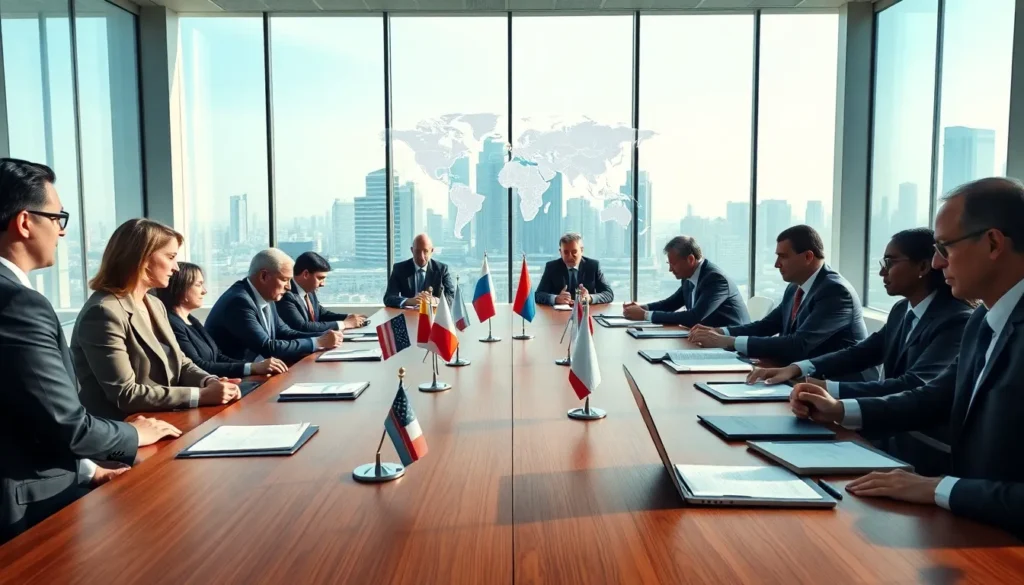
Understanding how to global affairs might seem overwhelming at first. The constant stream of headlines, shifting alliances, and economic developments can leave anyone feeling lost. But here’s the good news: anyone can learn to follow and interpret global affairs with the right approach.
Global affairs affect daily life in ways most people don’t immediately notice. Trade policies influence grocery prices. Diplomatic decisions shape travel restrictions. Climate agreements determine environmental regulations. Learning how to global affairs effectively means gaining insight into forces that touch everything from job markets to national security.
This guide breaks down the essentials for beginners. It covers what global affairs actually means, where to find reliable information, which topics matter most, and how to build lasting knowledge over time.
Key Takeaways
- Global affairs directly impact daily life through trade policies, travel restrictions, grocery prices, and job markets.
- Reliable sources for understanding global affairs include wire services like Reuters and AP, think tanks, and international publications such as Foreign Affairs and The Economist.
- Focus on core topics like great power competition, economic interdependence, climate change, and human rights to build foundational knowledge.
- Start with one region to develop deep understanding before expanding to other areas of global affairs.
- Build a consistent daily habit of 15 minutes of international news rather than occasional intensive reading sessions.
- Seek perspectives from multiple countries and news sources to overcome inherent biases and get a fuller picture of world events.
What Are Global Affairs and Why Do They Matter
Global affairs refers to the interactions between nations, international organizations, and non-state actors across political, economic, and social dimensions. It includes diplomacy, trade agreements, military conflicts, humanitarian efforts, and environmental cooperation.
Think of global affairs as the ongoing conversation between countries. Some conversations are friendly, like climate summits where nations agree on emission targets. Others are tense, like trade disputes or territorial conflicts. Understanding how to global affairs means learning to follow these conversations and recognize their implications.
The Direct Impact on Everyday Life
Global affairs shape local realities more than most people realize. When the European Union imposes sanctions on a country, supply chains shift. When OPEC adjusts oil production, gas prices change at local stations within weeks. When a pandemic emerges in one region, it can spread globally within months.
Consider employment. A trade deal between the United States and a manufacturing hub in Asia directly affects factory jobs in the Midwest. Technology regulations in Europe influence how American companies design their products.
Why Informed Citizens Matter
Democracies function better when citizens understand international issues. Voters who grasp global affairs can evaluate foreign policy positions during elections. They can distinguish between political rhetoric and substantive policy differences.
Businesses also benefit from employees who understand global affairs. Companies operating internationally need workers who recognize cultural differences, regulatory environments, and geopolitical risks.
Essential Sources for Staying Informed
Learning how to global affairs starts with finding reliable information sources. Not all news outlets provide equal depth or accuracy on international topics.
Major News Organizations
Several outlets specialize in international coverage. The Associated Press and Reuters provide wire service reporting that prioritizes facts over opinion. BBC World Service offers perspectives from outside the American media ecosystem. Al Jazeera covers regions often underrepresented in Western outlets.
For deeper analysis, Foreign Affairs magazine publishes expert commentary on policy debates. The Economist combines news coverage with analytical perspective. These publications help readers move beyond headlines into context.
Government and Institutional Sources
Primary sources often provide the most accurate information. The United Nations publishes reports on humanitarian crises, peacekeeping operations, and development goals. The World Bank releases economic data and development research. National governments publish their own foreign policy documents and diplomatic statements.
Think tanks like the Council on Foreign Relations, Brookings Institution, and RAND Corporation produce research papers on global affairs topics. These organizations employ experts who specialize in specific regions or issues.
Podcasts and Video Content
Audio and video formats make global affairs more accessible. NPR’s “Up First” covers international news daily. “The Daily” from The New York Times frequently features global stories. “Pod Save the World” provides analysis from former government officials.
For video content, VICE News produces documentary-style coverage from conflict zones. DW News offers German public broadcasting’s international perspective. These formats work well for learning how to global affairs during commutes or workouts.
Key Topics to Follow in International Relations
Global affairs covers a massive range of subjects. Beginners should focus on several core areas to build foundational knowledge.
Great Power Competition
Relationships between major powers, the United States, China, Russia, and the European Union, shape global order. Trade tensions between Washington and Beijing affect technology supply chains worldwide. Russian actions in Eastern Europe influence NATO strategy. European Union regulations set standards that companies globally must follow.
Understanding these relationships provides context for interpreting most international news. When a smaller country faces a crisis, the response often depends on how it fits into great power dynamics.
Economic Interdependence
Global trade and finance connect economies in ways that create both opportunity and vulnerability. Supply chain disruptions during recent years demonstrated how production networks span continents. Currency fluctuations in one country ripple through markets elsewhere.
Key institutions to watch include the International Monetary Fund, World Trade Organization, and regional trade blocs. Decisions by central banks, especially the Federal Reserve and European Central Bank, affect global capital flows.
Climate and Environment
Climate change represents a genuinely global challenge. The Paris Agreement brings nearly 200 countries together around emission reduction goals. Disputes over responsibility, financing, and timelines reveal competing national interests.
Environmental issues intersect with security concerns. Water scarcity contributes to regional conflicts. Extreme weather events create refugee flows. Resource competition may increase as some materials become scarcer.
Human Rights and Humanitarian Issues
Refugee crises, genocide prevention, and human rights enforcement remain central to global affairs discussions. The UN Human Rights Council monitors violations worldwide. International courts prosecute war crimes. Humanitarian organizations respond to disasters and conflicts.
Building Your Global Perspective Over Time
Learning how to global affairs is a long-term process. Knowledge builds gradually through consistent engagement rather than intensive cramming.
Start With One Region
Instead of trying to follow everything, pick one region and learn it deeply. If someone has family connections to Latin America, start there. If work involves Asian markets, focus on that continent. Deep knowledge of one area provides a framework for understanding others.
Learn the major historical events, key political figures, ongoing disputes, and economic conditions. This foundation makes news from that region immediately more comprehensible.
Build a Daily Habit
Consistency matters more than intensity. Reading 15 minutes of international news daily produces better results than occasional deep dives. News apps can send notifications for topics of interest. Morning briefing newsletters provide curated summaries.
Set realistic expectations. Nobody fully understands every global affairs topic. Even experts specialize in specific regions or issues.
Seek Multiple Perspectives
Every news source carries biases, national, political, and commercial. Reading coverage from different countries reveals how the same event can be framed in vastly different ways.
When a dispute involves two countries, read sources from both. American coverage of U.S.-China relations differs from Chinese state media coverage. Neither tells the complete story. Reading both provides a fuller picture.
Connect News to Underlying Forces
Surface-level news makes more sense when connected to deeper patterns. Why does a particular conflict keep recurring? What economic interests drive a trade dispute? Which historical grievances fuel current tensions?
Asking these questions transforms passive news consumption into active learning. Over time, patterns become visible that help predict future developments.